The suitcase with space to spare (or how to buy less and choose better)
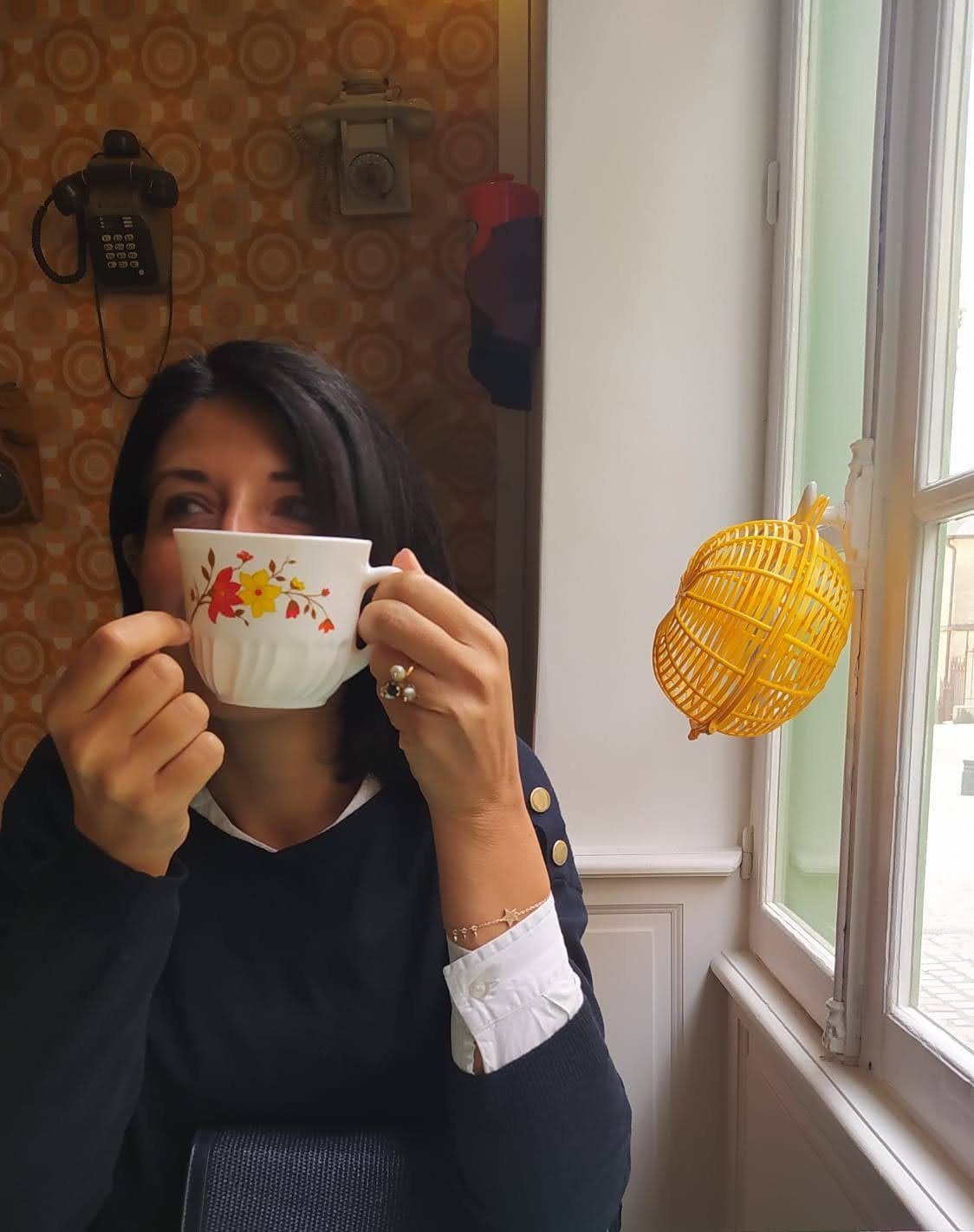
Laura Galloppo
Rome, Monti district. There’s a different way to go shopping, one you’ll never see on Instagram. No piled-up shopping bags, no “haul” videos, no compulsory excitement in front of a shop window. In fact, sometimes you go home without having bought anything at all. Or maybe you’ve already “bought” everything you needed.
And that’s absolutely fine. Laura is the one who leads sustainable shopping tours in Monti. Key words: vintage, second hand and craftsmanship.
I met her years ago, when we were neighbours. Then Rome stretched out, lives drifted apart, neighbourhoods changed. We lost touch, as often happens in this city. We ran into each other one evening in Esquilino, in one of those places where everyone seems to know everyone else. A quick hello, a “we’ll be in touch”, and this time we actually were. Because in the meantime things had changed: I had opened La Casa al Colosseo, between Colle Oppio and Esquilino. Once again, we were close.
In this same area, she lives and works, guiding people who want to understand what we mean today by “sustainable fashion” and giving them a few extra keys to understanding a phenomenon we seem to hear about all the time. I realised that what Laura does was exactly what my guests were missing: not yet another list of places to tick off, but an experience you carry with you even when your suitcase is still empty.
What does “sustainable fashion” really mean?
When I ask her what sustainable fashion means to her, Laura doesn’t start with the usual buzzwords: zero waste, short supply chain, recycling, all important, all valid, but now overused. That’s when it clicked for me. It’s not just about eco-friendly fabrics or ethical production (though those matter). It’s about training your eye and learning to ask new questions. Who made this garment? Is it vintage? Have I read the label? The aim is to stop buying on autopilot, out of anxiety, boredom, or that “I’ve got nothing to wear” feeling in front of a wardrobe that’s already full.
A tour with Laura in Monti is a walk through a route of boutiques she’s carefully chosen, where she knows the owners and their work. A vintage shop where every jacket has a story, a small brand producing a handful of well-made pieces, an atelier where you can still speak to the person behind the sewing machine. Some things you try on. Some you put straight back. Some you rule out immediately. The point is not how many bags you’re holding, but the experience you take home.
Laura doesn’t tell you what to buy. She talks you through the key moments in the spread of sustainable fashion, the turning points that marked a change of course internationally and in Italy. She takes you by the hand and lets you surf through different eras of fashion history, from the 1950s to the 2000s. You get references and glimpses of fashion history that help you see the clothes you’re looking at with new eyes. Next time you come across a vintage piece, you might recognise its cut, its shape, its fabric, and the spirit of the time it belonged to.
Yes, she’ll ask you a few questions too, with a quick quiz at the start to break the ice. No grades, no judgement, it’s just a way to introduce some ideas that you’ll then see in real life in the boutiques where you’ll leave your mark.
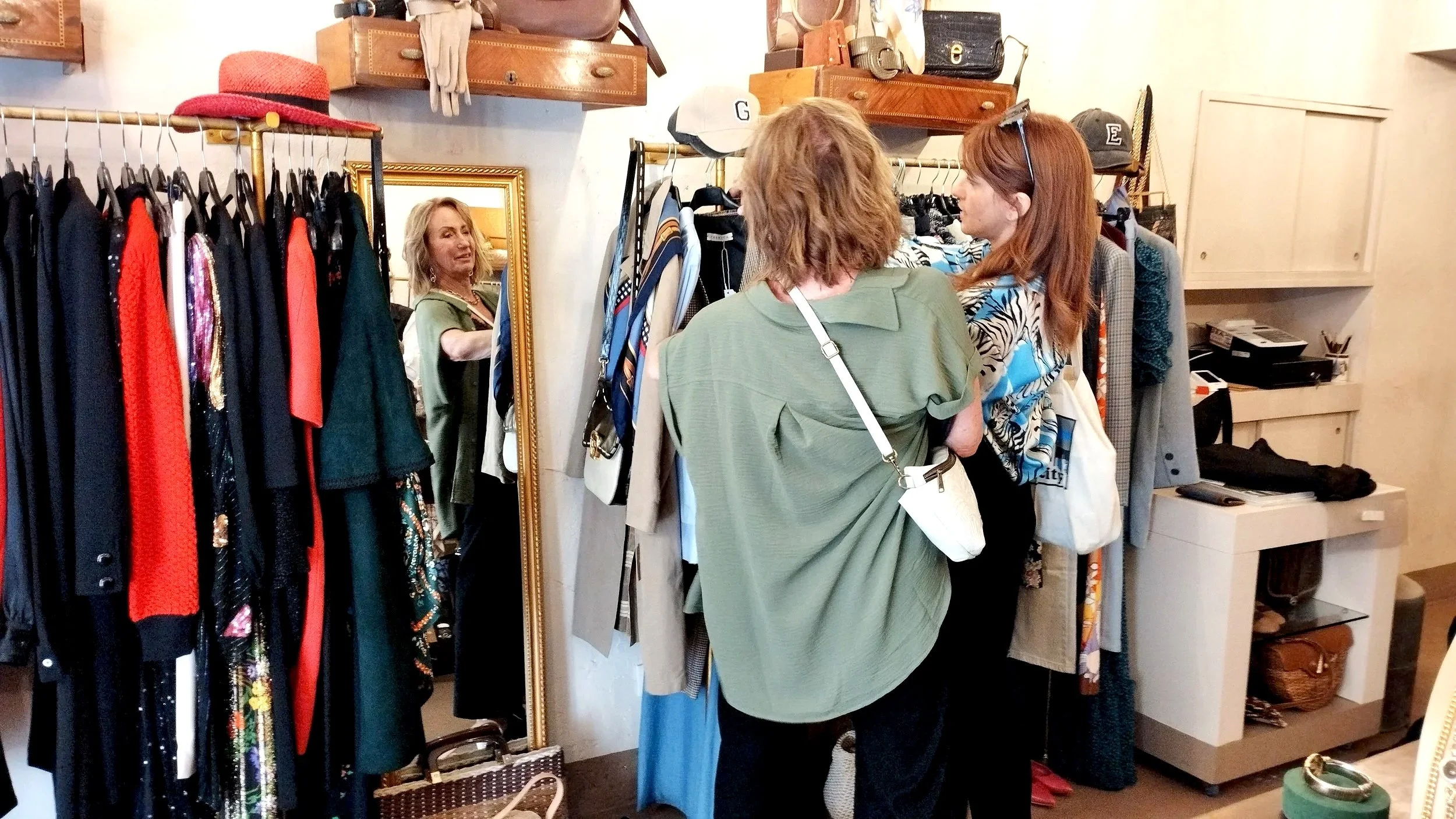
Chances are that after this tour you’ll find yourself thinking…
Do I know the story behind this dress? Who sewed it? Where? In what conditions? Why is it so cheap, or so expensive? How long will it last? Does this piece actually work in my life, or only in the fitting room? Could I really wear it tomorrow morning to go to work? To walk for an hour? Could I throw it into a suitcase without a second thought? Or does it only exist for that one photo, that one moment, that version of you that isn’t really you?
They’re awkward questions. The ones that show up when you already have your card in your hand. But they’re also the questions which, over time, save you money, space, and that strange heaviness that comes with every wrong purchase.
The idea of the (almost) empty suitcase
Here’s my suggestion: set off with an almost empty suitcase. Pack a few pieces you truly love, the ones that feel like you wherever you are. Leave room, physical space in your suitcase, and mental space too, for different choices. This isn’t an invitation to fill that emptiness at all costs. Quite the opposite: it’s the chance to go back home with fewer things, but ones that are fully yours.
And if you don’t buy anything? Perfect. It means you’ve made the hardest choice of all: not to buy. “Buy less, choose well and make it last” is one of the most famous quotes by the revolutionary designer Vivienne Westwood. Or you might end up buying one beautiful dress that moves you, and that forever reminds you of your Roman fashion “experience”.
What an afternoon with Laura looks like
Sometimes the tours start directly from La Casa al Colosseo. You meet in the kitchen, with a coffee and a half-empty suitcase sitting in the corner. You chat a bit about what you’re hoping to get from this experience, what you truly want to take home, and I don’t just mean clothes: perhaps an exhibition to see in the city, or a neighbourhood to explore. Then you head out, cross Colle Oppio, and walk down towards Monti. From that point on, the city is hers.
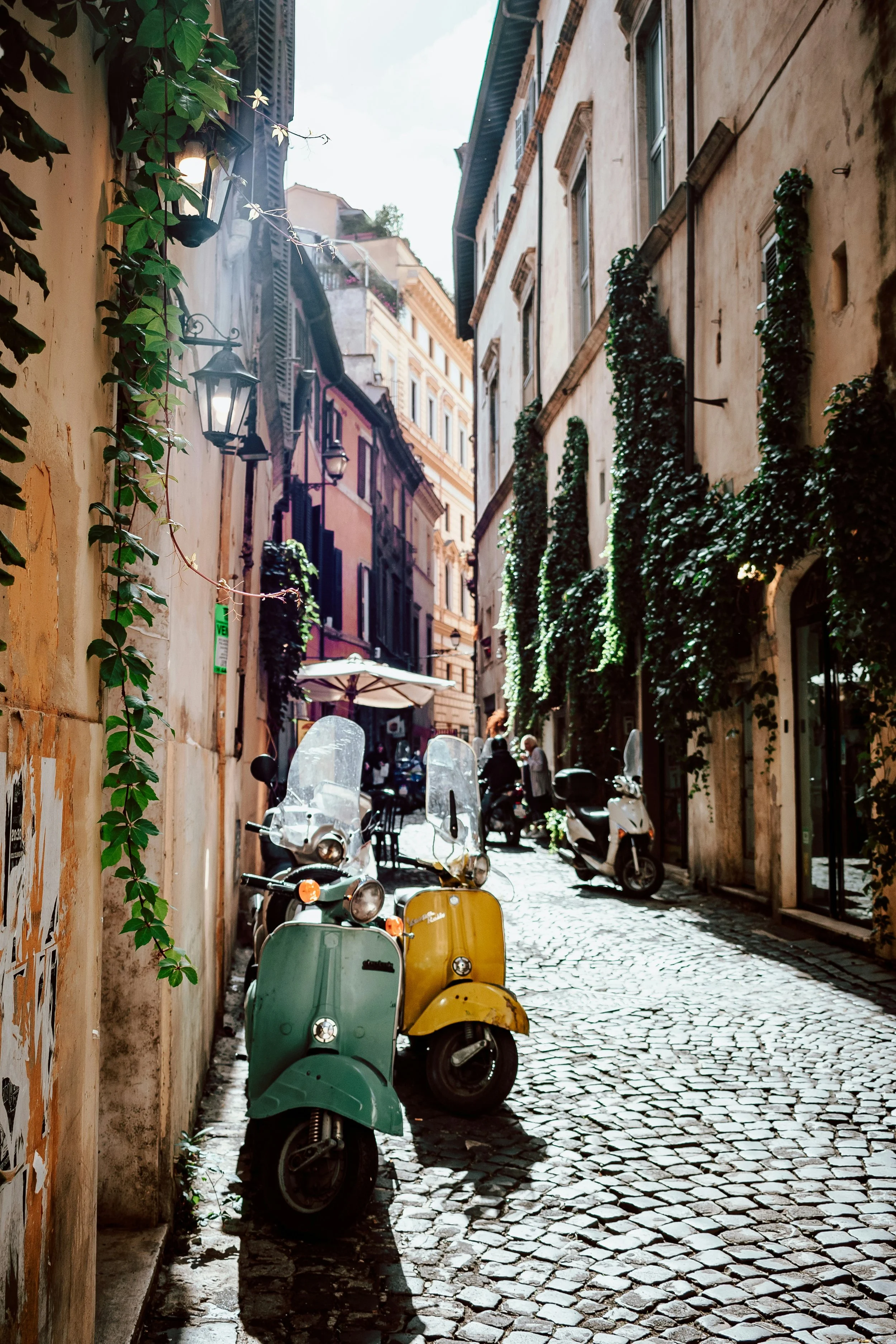
Photo by Andrei Mike
Laura chooses the shops based on the person in front of her. It isn’t a fixed route, and it isn’t a checklist to complete. It’s an itinerary that takes shape as you walk, shaped by your questions, your doubts, and what you’re secretly looking for without yet being able to name it. And this is where the most important thing happens: Laura is the easygoing friend with whom you stroll through one of Rome’s most characterful neighbourhoods, Monti, and who knows how to tell its story of transformation and redemption, from Roman suburra to today’s “place to be”, an unmissable stop for design lovers visiting the city. And that, in the end, is the real luxury. Living the experience.
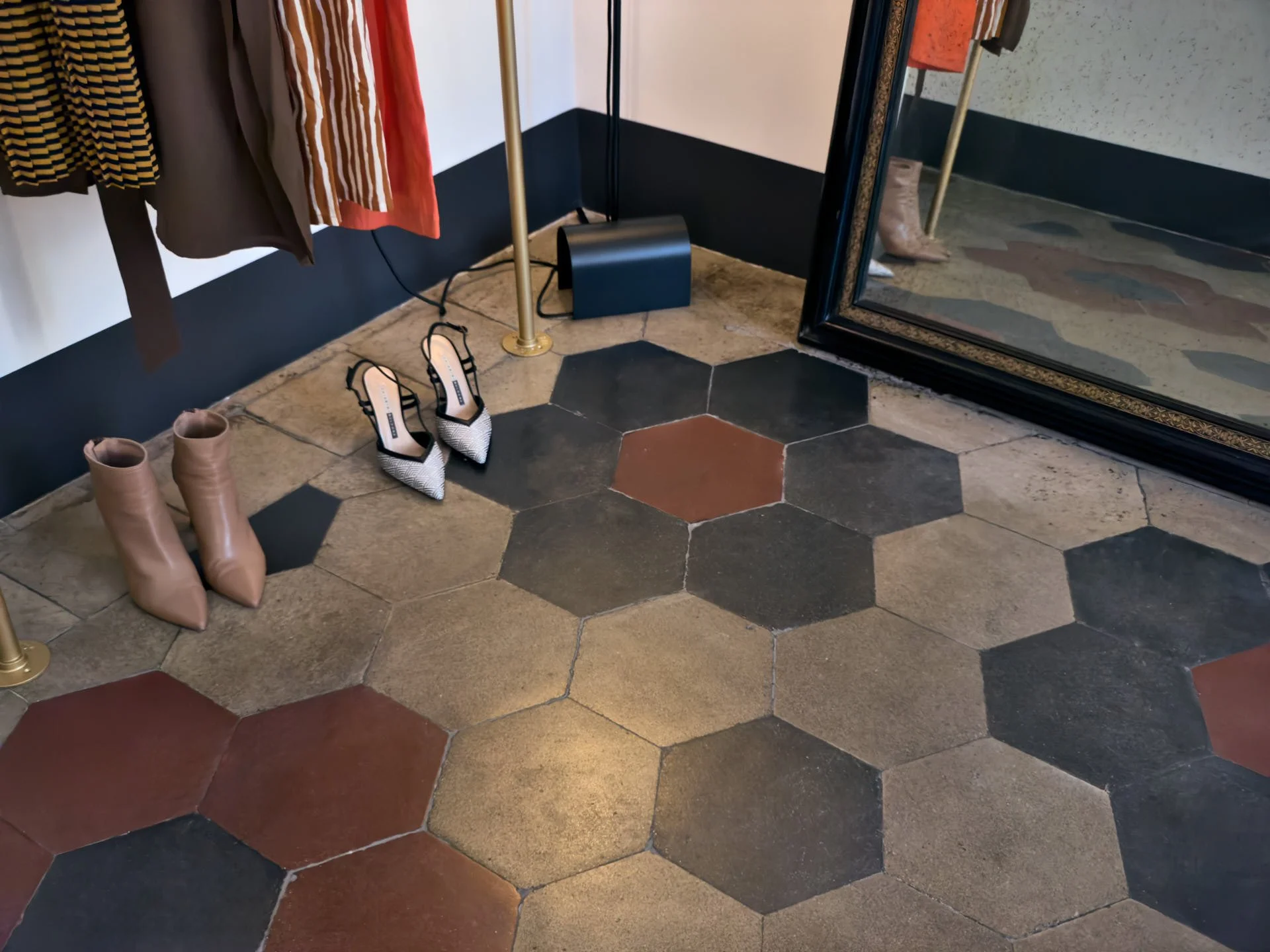
Photo by space+style™️ picture and media production @marcojoefazio creatives
What happens afterwards
You go back to your room. The suitcase is still there, with that empty space you left. And you realise you don’t feel deprived of anything. Quite the opposite. You feel lighter. You’ve savoured the vintage side of the capital, and chatted, for instance, with shop owners who have told you how attitudes towards vintage and pre-loved pieces have evolved in Rome.
And that “experience” now takes up just the right amount of space in your suitcase, instead of a pile of pointless purchases. La Casa al Colosseo is not the place you come to in order to buy more. It’s the place you leave with less desire to fill up the gaps. Between a coffee in the kitchen, a walk through Monti and a few well-timed questions, you might go back home with a suitcase full of the fashion experience you’ve just lived, and with the certainty that you know exactly what’s inside it.
And if you’d like to live this experience with Laura, all you need to do is say so when you book your stay.