Christmas in Rome. Instructions for getting lost
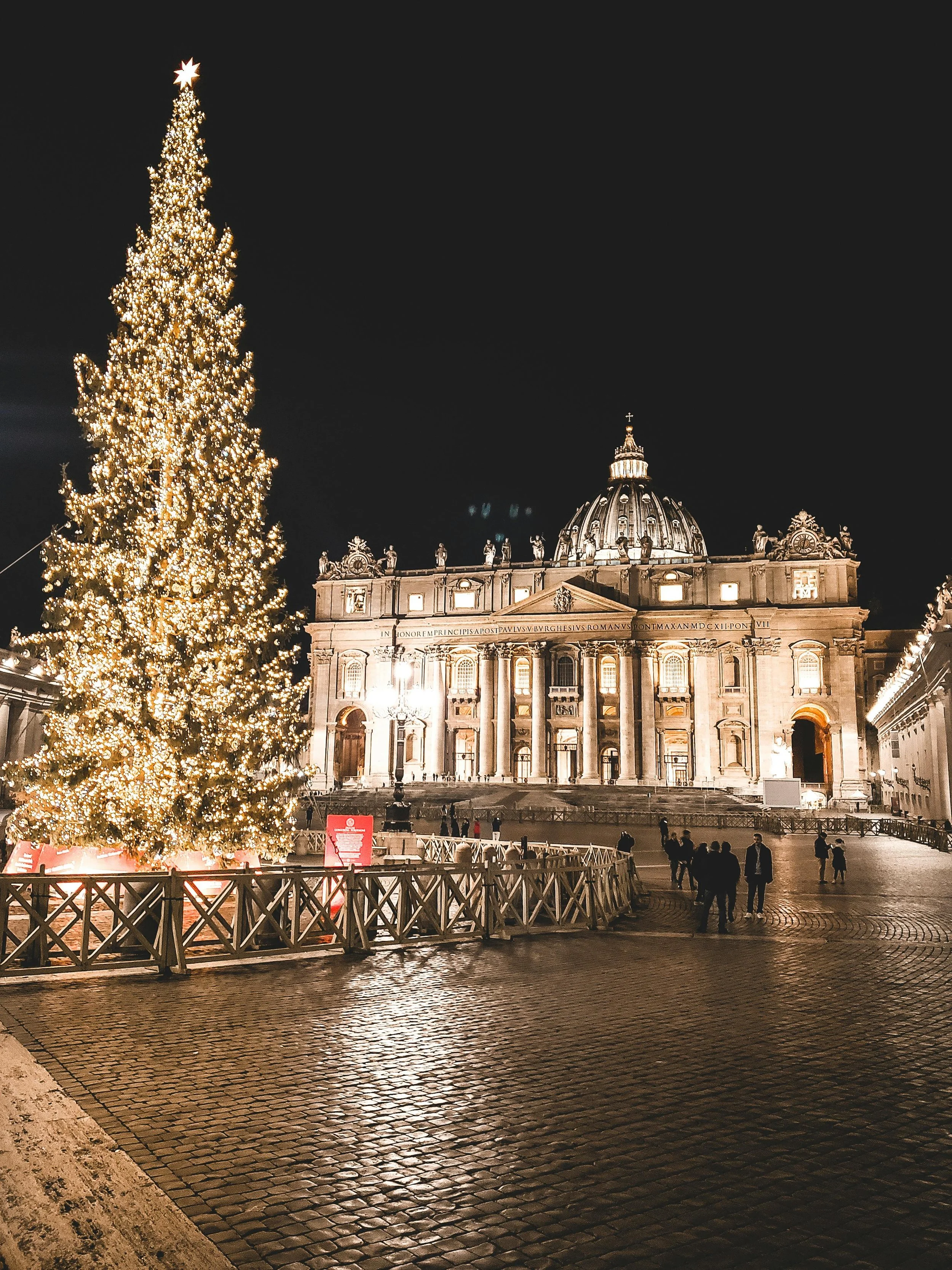
Photo by Javon Swaby
Rome in December doesn’t ask for approval. It doesn’t pose. It lights up because it’s December, not because it has something to prove. The lights on Via del Corso come on with the same inevitability as the moment Romans find themselves, at some point on Christmas Eve, sitting down at the table. It isn’t excitement, it’s familiarity, it’s home calling.
Anyone looking for Nordic perfection, the kind of cities that at Christmas seem to have stepped out of a tin of Danish biscuits, everything neat, everything scheduled, everything photo ready, has chosen the wrong latitude. Here it’s as it always is, beautiful and impossible, generous and chaotic. Capable of handing you a sunset that takes your breath away, and then leaving you at a bus stop waiting for a bus that never turns up.
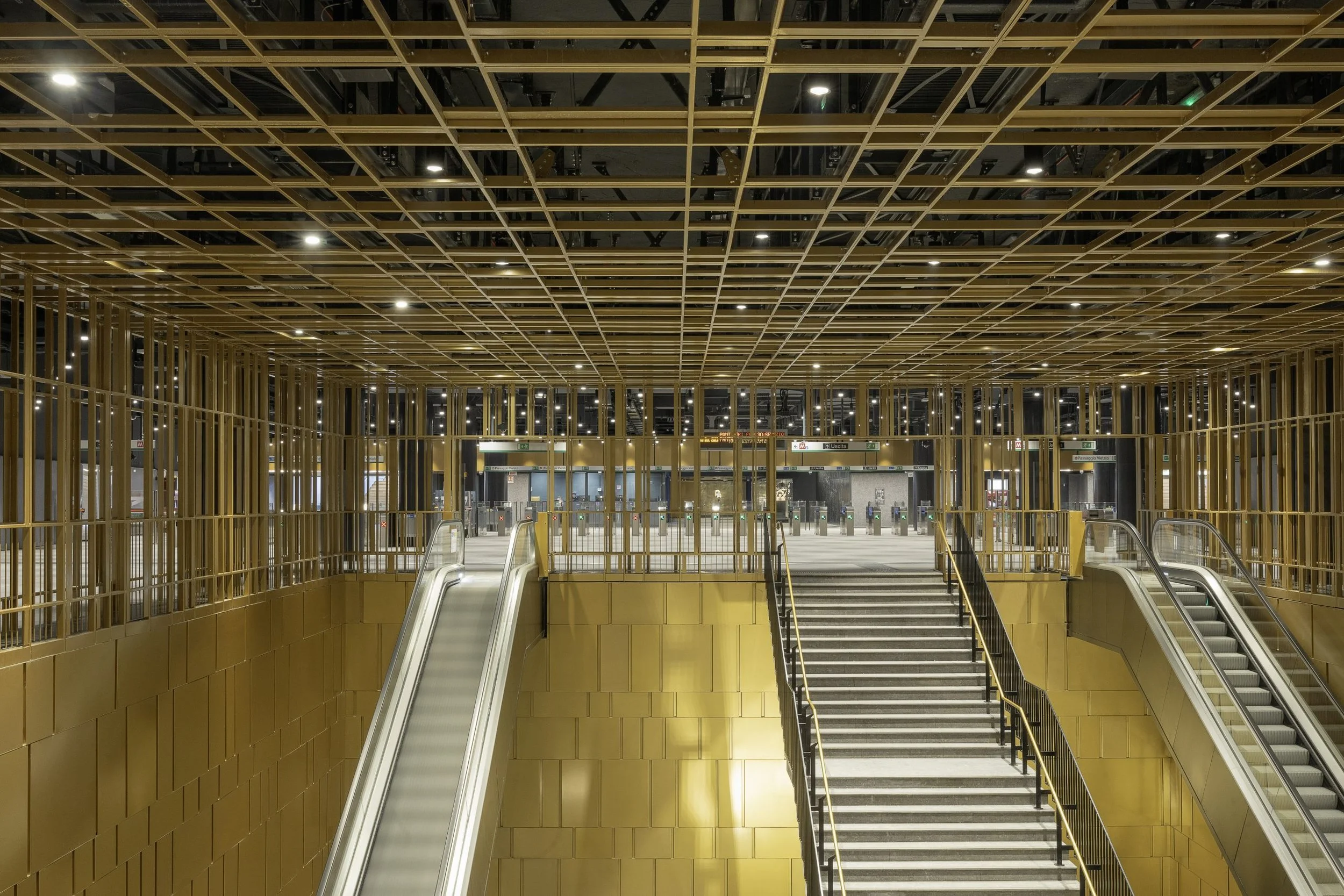
In Rome, the small miracles are practical ones. The kind you measure in minutes and footsteps. Metro Line C now reaches Colosseo, Fori Imperiali. For a tourist it’s a detail. For anyone who lives here it feels almost physical, one of those things that gives time back. And time, in this city, is the real headline.
Parco archeologico del Colosseo Photo by Simona Murrone
Then December arrives, and it doesn’t arrive quietly. It arrives like a raid. The centre fills up not gradually, but all at once, as if someone’s opened a dam. Via Cola di Rienzo, Via Nazionale, Via del Corso become human corridors where you move elbow to elbow. Shop assistants hold the line with discipline, politeness on the surface, surrender underneath.
The wonders have been there for centuries, and yet in December people pack themselves in front of Zara’s windows. That’s Christmas too, the contradiction between sacred and profane, between the Pantheon and the shopping centre, between the promise to slow down and the reality of always rushing.
Piazza Navona is a very effective Christmas decoy.
For me it isn’t the heart of a Roman Christmas. Every year it turns into a market that’s become ritual, stalls, mass produced torroni, plastic toys, figurines. It’s kitsch, it’s touristy. I pass through because, even in all that chaos, Piazza Navona remains itself, a theatrical kind of beauty, made of water, stone and perfect proportions. A steady beauty that holds everything else up.
The fountains can finally be read properly. The Fountain of the Four Rivers, with its marble continents that look as if they’re always shifting. The Fountain of the Moor, taut and powerful. And then the sunset comes, the light drops, turns slantwise, and for a moment softens everything, even the noise, even the crowd. That’s when it becomes clear again why this city, with all its faults, still earns the journey.

Photo by Umit Yildirim
On the corner there’s a chestnut seller. Yes, he’s unofficial. And yes, you can find chestnuts in August if you know where to look. But in December they taste exactly as they should, smoke, warmth, season. Perfect for doing the smartest thing you can do here, taking a side street. Via di Tor Millina, Via della Pace. In a few minutes everything improves, another Rome, softer spoken, easier to breathe in, the one that lets you pass.
One calendar stop, better to leave the rest to chance.
For two thousand years this city has known how to do theatre. At Christmas it doesn’t suddenly become new, it simply turns the volume up. At the Teatro Costanzi there’s The Nutcracker, a classic that still works because Tchaikovsky goes straight for the feeling. At the Auditorium Parco della Musica, gospel puts spirituality in your bones, it’s less about understanding than about feeling it. At Santa Cecilia, Mahler and Handel are two different ways of reminding you that, every so often, human beings need a bit of grandeur, if only to go home a little lighter. Outside, meanwhile, someone is arguing with a taxi driver about a fare because “it’s only two minutes”, and the city snaps straight back to its favourite job, being contradictory.
Then there are the 100 Nativity Scenes at the Vatican, the same story told in a hundred material languages. Scandinavian wood, Andean terracotta, Japanese paper thin as breath, African cloth that speaks loudly where others whisper.
On the 25th, walking starts early, Rome changes scale.
On 25 December something rare happens. Rome actually stops. The centre’s streets, usually clogged, become suddenly walkable. Squares empty out. The noise halves. The air feels cleaner, or maybe it’s just that sound has withdrawn.
It’s the best time to walk, when shadows stretch long and the cobbles shine with frost. Every so often a bar will be open, against all economic logic.
If you prefer an everyday Rome, the one that works and lives without trying to look good for the camera, there’s Garbatella, 1920s social housing designed around an idea that was radical at the time, that public housing could still be dignified. Courtyards where life still happens in public, external staircases that create accidental theatre. Here beauty is simply part of the daily landscape.
A side street church, a moment of quiet.
The historic centre offers something else as well, interiors that lower the volume on their own. San Pietro in Vincoli is one of them, Michelangelo’s Moses, packed with contained energy, as if it might move at any moment. The church is often less crowded than the “must do” stops, and that changes everything, more time, less noise.
A little further on, San Clemente is pure stratification, a medieval basilica over an early Christian church over a Roman mithraeum. You go down and cross two thousand years in fifteen minutes, quite literally. It’s the physical proof that here the present never stands alone, it’s always supported, complicated, threaded through.
Then you step back out and in a few minutes you’re between the Colosseum and the Forum. After the interiors, the contrast hits immediately, inside you moved down through levels, outside the levels are already in the street. Roman remains in plain view, asphalt on top, the constant flow around you, buses, mopeds, tour groups moving through as if nothing’s unusual. Here the past isn’t separate, it runs along the same route as the present.

Photo by Edoardo Cuoghi
Meanwhile, in Roman homes, the games begin.
Cards are dealt after lunch, when someone’s eaten too much and someone else has fallen asleep on the sofa with the television still on. Burraco, for anyone who isn’t Italian, can seem as mysterious as bridge, just with more passion. It’s played with total concentration. There are tactics, there are alliances, and there are old grudges that resurface over one badly played card.
Then there’s tombola, like bingo, except it’s less about winning and more about being together. Every number comes with a nickname, a story, 33 is the age of Christ, 90 is fear. It’s tradition handed down, a way of being together that requires patience, and that very Italian talent for turning almost anything into a shared moment.
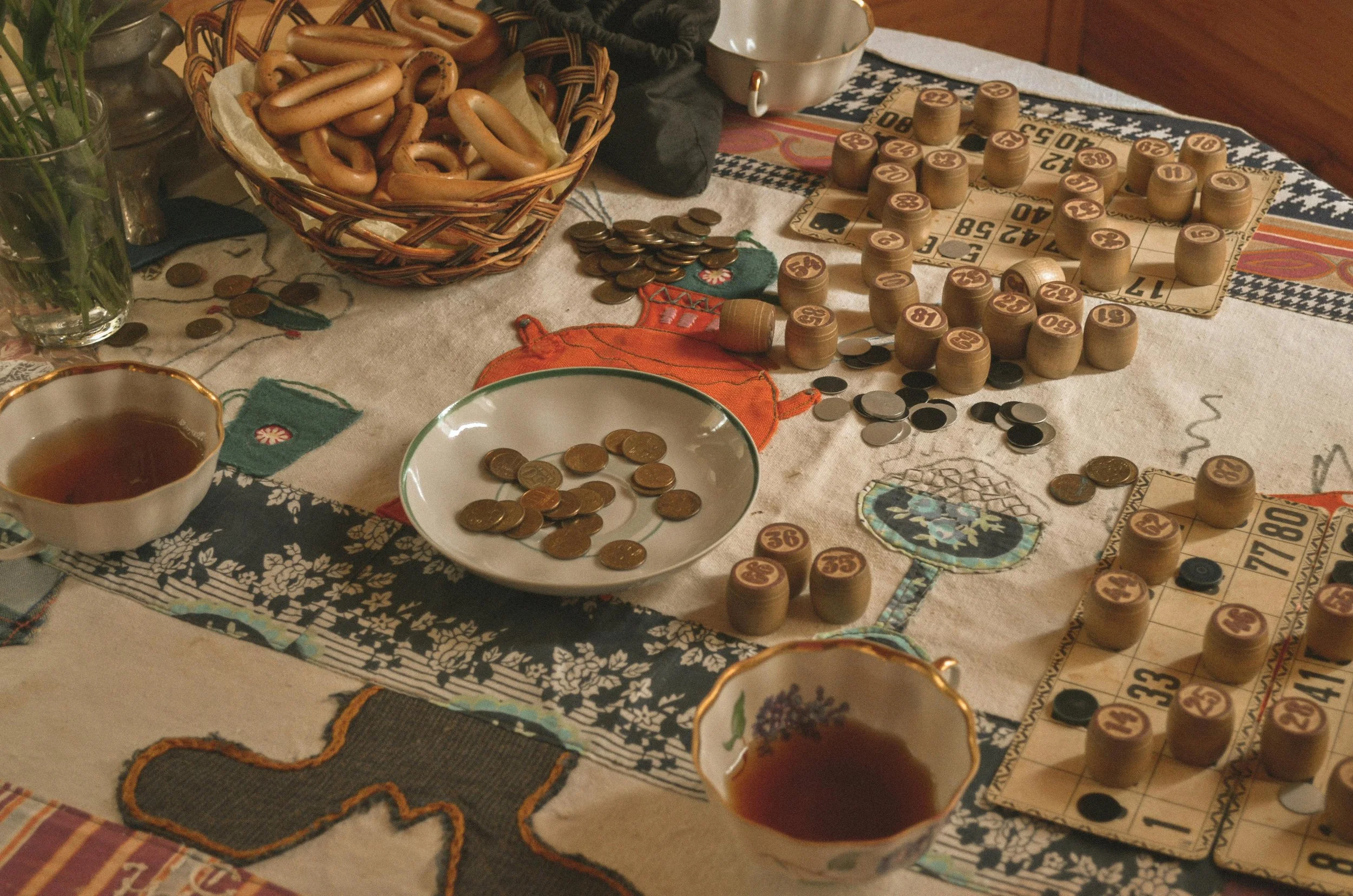
Photo by Екатерина Глущенко
And then Mercante in fiera, a gambling game disguised as a Christmas pastime, where the thrill is almost entirely in the waiting, not knowing whether your card will be the lucky one.
What makes this Christmas different from the others?
Maybe nothing. Maybe everything.
The panettone is on the table, the artisanal one from the good pastry shop, not the supermarket industrial version. There’s the tree, real or fake, like so many family debates, irrelevant until it becomes a matter of principle. The lights, the impossible traffic. But then there’s that sunset that gives you your patience back. And there’s the city going on with its life, between those who walk and those who stop, between those who leave and those who stay.
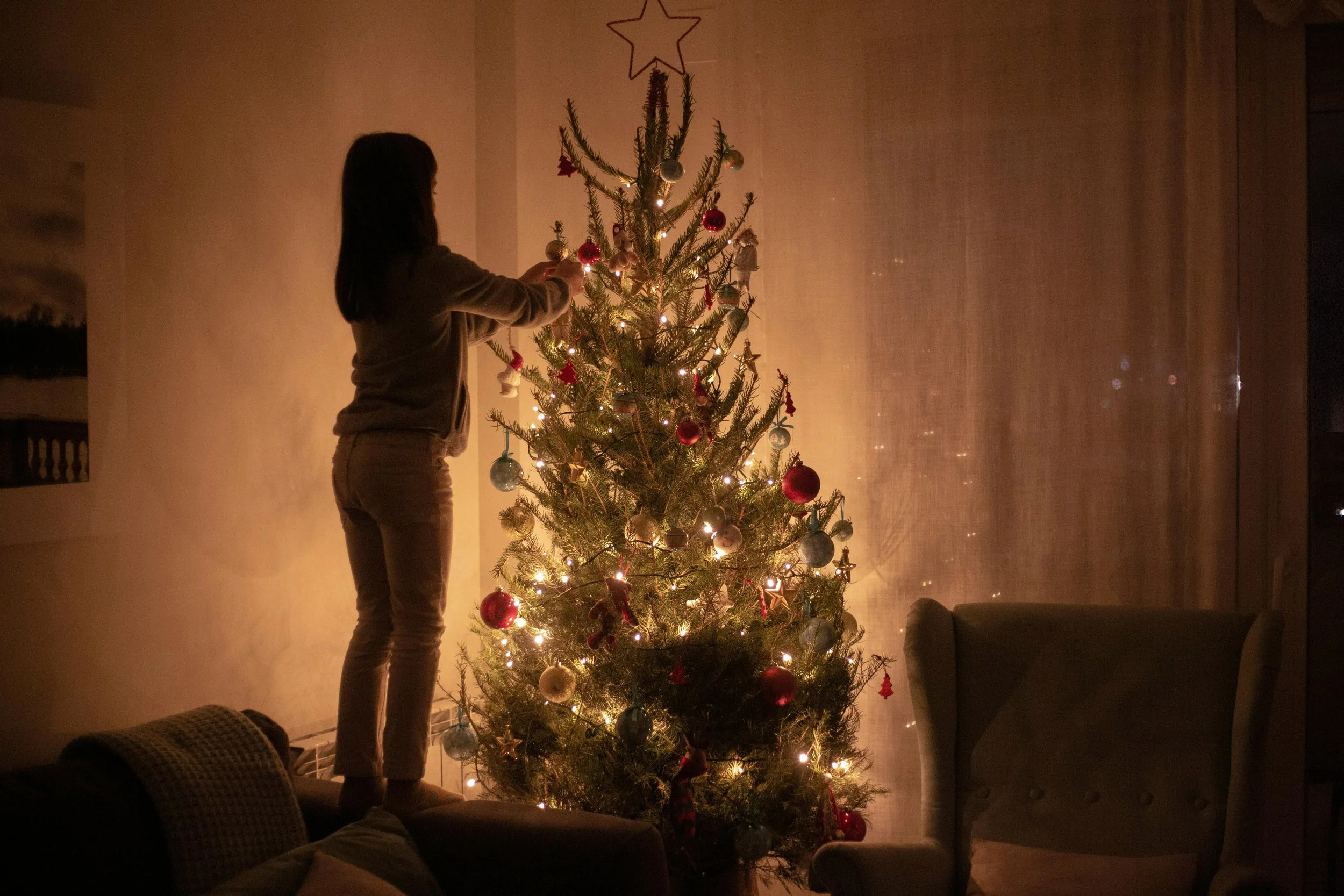
Photo by Ignacio Pereira
It’s worth spending Christmas in Rome. Not because it’s perfect, but because it isn’t. Because Christmas here isn’t an “event”, it’s a passage. Like centuries layered one over another, like the cobbles holding footsteps without keeping score.
Maybe that’s the real gift, realising there’s no need to be impeccable in order to last. That beauty holds out precisely in imperfection, in the disorder, in the moment you stop chasing what should be and accept what is.
Rome at Christmas remains itself, imperfect, generous, inevitable.
And you, in the end, are exactly where you were meant to be.