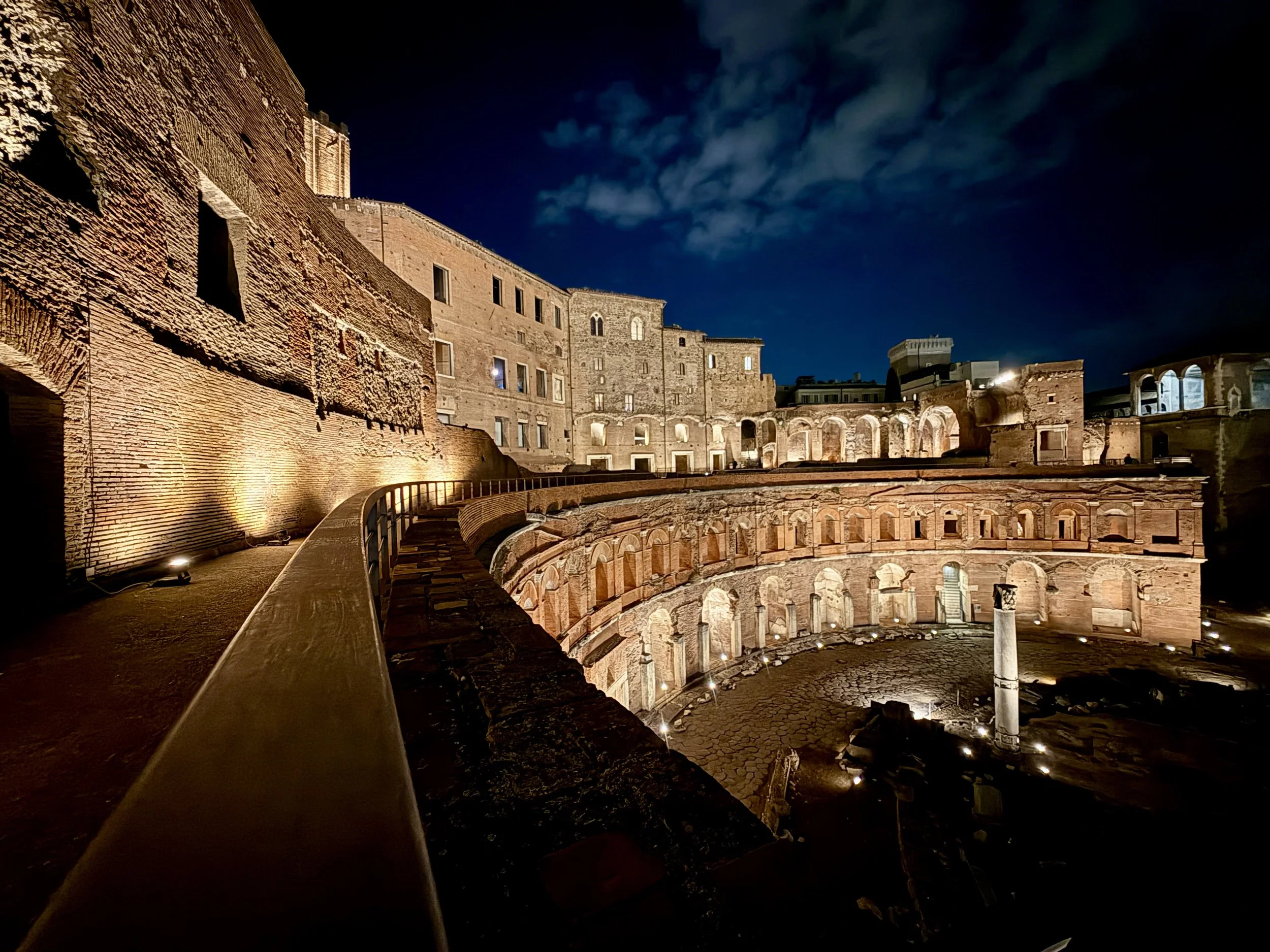
Rome Behind the Scenes: The Machine — Trajan’s Markets, when Rome stops being just a backdrop
These aren’t romantic ruins; they’re a machine. Six storeys climbing up the Quirinal, interior spaces that open out and stitch themselves back together, ramps locking different levels into place, a covered gallery linking rooms and functions. As you walk, you realise the plan was drawn to keep people, goods and documents moving – like a contemporary shopping centre, except the idea was born here two thousand years ago. Not a local street market with overlapping voices, but the operational back-room of imperial Rome: tabernae on the street front and, above all, storerooms, offices and archives serving the great Forum of Trajan. Grain, oil, cloth and spices reached Rome through a capillary system of ports, warehouses and administrations. The Markets belong to that network – not the shopfront, but the mechanism that makes the rest possible.

Stories of Home: Geena, henna artist from London
Some people arrive in Rome with a printed itinerary in hand.
Others come with a simpler intention: to pause, breathe, and let themselves be surprised by whatever happens.
When Geena, a professional henna artist from London, booked a week at La Casa al Colosseo, she wasn’t chasing monuments. She was looking for quiet – and for the kind of inspiration that only appears when you finally slow down.